“以我在成都一年的有限观察来看,成都幼儿园以及小学有着非常多的‘草根足球人口’,我经常看到他们在训练中做出很漂亮的动作。
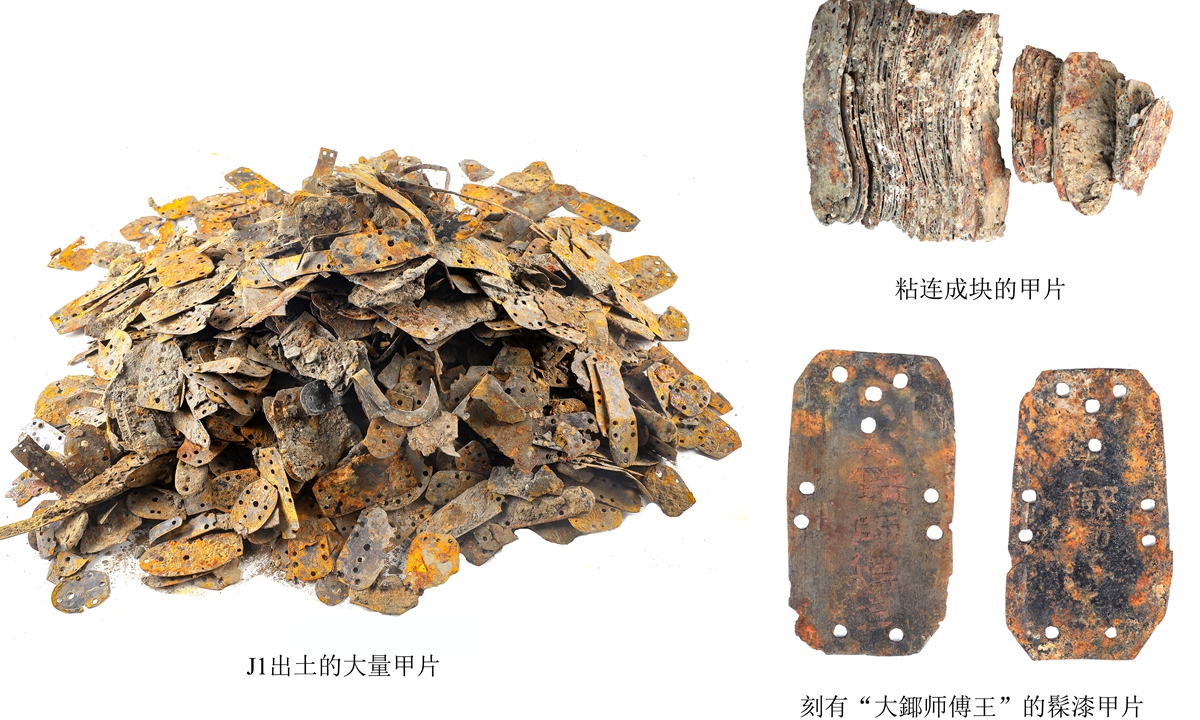
A number of tinned iron armor plates excavated from the Jizhong site Photo: Courtesy of the Shaoxing Institute of Cultural Relics and ArchaeologyArchaeologists at the Jizhong ruins site in Shaoxing, East China's Zhejiang Province, recently unearthed a large number of tinned iron armor plates and semi-finished pieces dating to the Wu period of the Three Kingdoms (222-280), according to the Shaoxing Institute of Cultural Relics and Archaeology. These discoveries represent the earliest known tinned iron artifacts in China to date, as well as the earliest tinned iron production remains found anywhere in the world, proving that an organized, systematic craft industry for tin-plated ironwork existed at that time.
While China has a long history of making tinned bronze and tinware, there has long been a lack of reliable historical records or physical evidence to prove early local production of tinned iron artifacts. The newly discovered armor plates can fill this gap, demonstrating that, by no later than the Wu period, local craftspeople in Zhejiang Province had mastered the art of tin-plating iron surfaces. This reflects the region's advanced metallurgical skills at that time, Ge Shuaikun, a researcher at the Shaoxing Institute of Cultural Relics and Archaeology, told the Global Times on Tuesday.
Over the last three years, archaeologists working at the Jizhong ruins site have excavated hundreds of tinned iron armor plates from ancient wells and ash pits. A preliminary investigation confirmed that the surfaces of these plates contain high levels of tin. Subsequent laboratory analyses were conducted in collaboration with the Shaoxing's institute and the Institute for Cultural Heritage and History of Science & Technology at the University of Science and Technology Beijing with methods such as Scanning Electron Microscopy with Energy Dispersive Spectroscopy (SEM-EDS), X-ray Diffraction (XRD), and Micro-CT to deeply examine the samples' materials, structures, and technological traces.
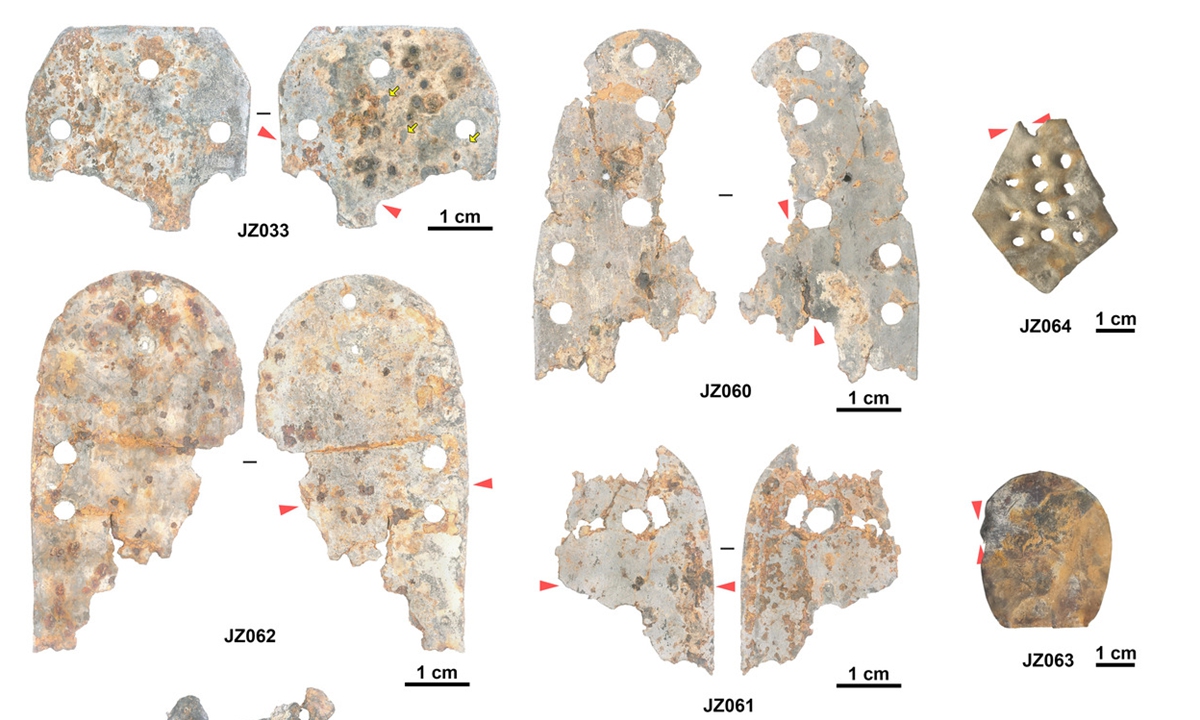
Photo: Courtesy of the Shaoxing Institute of Cultural Relics and ArchaeologyAccording to Ge, tin is a non-toxic metal with a low melting point, excellent corrosion resistance, and a silvery sheen. Tin plating effectively prevents rust, making iron armor far more durable and indeed, even after being buried for 1,700 years, many of these tinned plates retain their silvery metallic shine.
Research shows that the craftspeople immersed iron armor plates in molten tin, thus ensuring complete coverage of the surface with a continuous tinned layer. This coating isolated the iron from exposure to air and moisture, dramatically boosting corrosion resistance. Many of the excavated tinned armor pieces still show a clear, bright silver-white finish.
One major reason for tin-plating the armor was to prevent rust. At the same time, the silvery white shine of tinned iron offered a more striking, beautiful appearance, standing out from the typical dark iron armor of the era. This visual distinction may have marked these pieces as a higher-grade military asset, according to an article from the University of Science and Technology Beijing's official website.
The article said that in earlier eras, from the pre-Qin to Han dynasties, tin was widely used as a surface coating on bronzeware and ceramics. Researchers believe the tin-plating of iron armor discovered at the Jizhong ruins site during the Wu period of Three Kingdoms built upon this local tin-coating tradition, representing an adaptation of those techniques across different materials. The process likely benefited from technological exchange among various specialized workshops at the site, including those making bronze castings, iron weapons, and other metallurgical products.
。”19日清晨,成都足协日本教练天野圭介来到成都足协温江培训基地绿茵场,带领球员开始了新一天的足球实训。在这位有着25年执教经验的“洋教头”看来,虽然很多人谈及中国足球总会想到职业赛事,但“草根”也是中国足球不可忽视的部分。

二 | 作为首批中国足球改革试点城市以及“十四五”期间首批全国足球发展重点城市,每年都有近3万场的足球赛事在成都举行。这座西部足球重镇不仅为中国足球贡献了“雄起”这个至今仍在球场使用的高频词,火热运动氛围还吸引了葡萄牙、西班牙、日本等多个国家和地区的教练来此执教。中日足球的职业化改革几乎同时起步,而如今两国的职业足球水平却相距甚远。天野圭介表示,大部分中日球员的足球水平在12岁以后逐渐拉开,踢球时间不足、比赛数量少等原因导致了一些具备能力的中国孩子在最关键阶段成长越来越慢。

三 | “足球是一项非常复杂的综合运动,要让孩子成长为职业球员,首先需要转变教练的观念,机械性的执行指令在足球领域行不通。” 天野圭介说,教练不能用命令的方式限制球员的行动,而应当用启发与引导的方式让球员追求更高的目标,通过训练让球员知道足球的世界有哪些东西永恒不变。“球员要先搜集全场的信息进行判断,最后才是技术性的执行。” 和天野圭介一同通过日本足协选拔考核,来到成都执教青训的还有教练奥岳史,中国庞大的“草根足球人口”同样给他留下了深刻印象。“我这周去了不少幼儿园、小学交流,非常多的校园开展了丰富多彩的足球的活动,能感受到中国学生处在非常好的运动环境下。”奥岳史说,他留意到成都甚至将一些高架桥下的“边角空地”改造成了足球场。低谷中的中国足球是否真的能通过青训、归化、引进外教而重振?中国足协执委、成都足协主席辜建明表示,竞技体育不是足球的全部,在职业赛事之外还有更广阔的的大众足球,这也是足球发展的基础。成都足协1992年成立之初,成都每年只有千余场足球赛事,而目前该市每年会举办近3万场球赛,几十万足球爱好者参与其中。

四 | “但从另外一个角度,一年近3万场足球赛并不算多,比成都人口还少的荷兰每周都会举办5万场,足球的发展离不开‘草根’。

五 | ” 在成都足协担任技术总监的黎兵每周都会和在蓉外籍教练进行技术交流。这位曾任中国国青主帅的足球名宿坦言,目前中国足球青训体系并没有完全建立,除了青训教练水平参差不齐,更重要是青少年赛事体系亟需完善。“就在这个月,中国教育部、国家体育总局指导的第一届中国青少年足球联赛正式启动了,只有体教融合,中国青训才会有实质性的突破。”黎兵感叹,聘请外教确实可以引进外国先进的足球理念,但无论什么经验,最终还是需要结合中国自己的实际情况,才能探索出一条让中国足球走得更长、更好的路。(记者 贺劭清)